
Why Do We Tell Plant Stories?
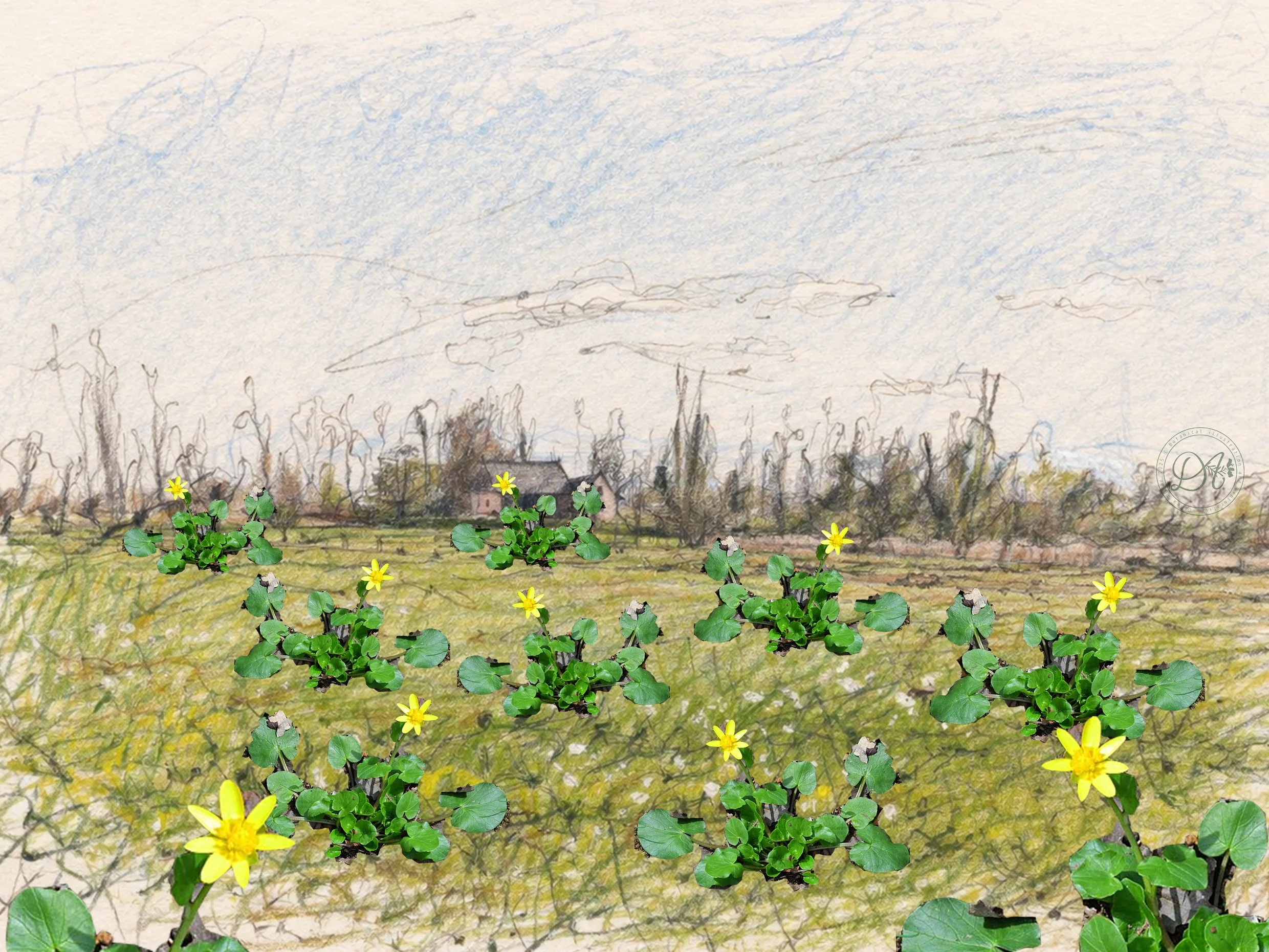
Throughout much of history, the arts and humanities have been shaped by a deeply anthropocentric worldview—one that places human beings at the center of existence and makes them the primary lens through which all other living beings are understood. Even when animals or plants appeared as protagonists in stories, they were often endowed with human qualities or used as vehicles for conveying moral lessons about human life. Beneath this narrative tradition lay an enduring hierarchical vision that positioned humanity above all other forms of life, reducing the living world to a resource, a tool, or merely the backdrop against which human history unfolds.
What often goes unnoticed is that history can also be told through plants. By tracing the journeys of wild and cultivated species—their movements across landscapes, the transformation of their uses, and their connections to migration, settlement, trade, medicine, ritual, and the shaping of cultural landscapes—we uncover another way of reading the past and the future. When plants become the focus of a narrative, they cease to function merely as symbols of humanity or as silent scenery for human actions. Instead, they emerge as living beings with their own evolutionary histories, ecological characteristics, and remarkable capacities to respond, adapt, and participate in the making of place.
Making plants the protagonists of a story does not mean attributing to them a human voice or human intentions. Rather, it means allowing them to become the point around which relationships between people, other living beings, environments, and different moments in time are woven together. The question, then, is no longer Why should we write about plants? but rather: How has a living being of such complexity, significance, and intimate presence in the fabric of life remained outside the center of so many of our contemporary narratives?
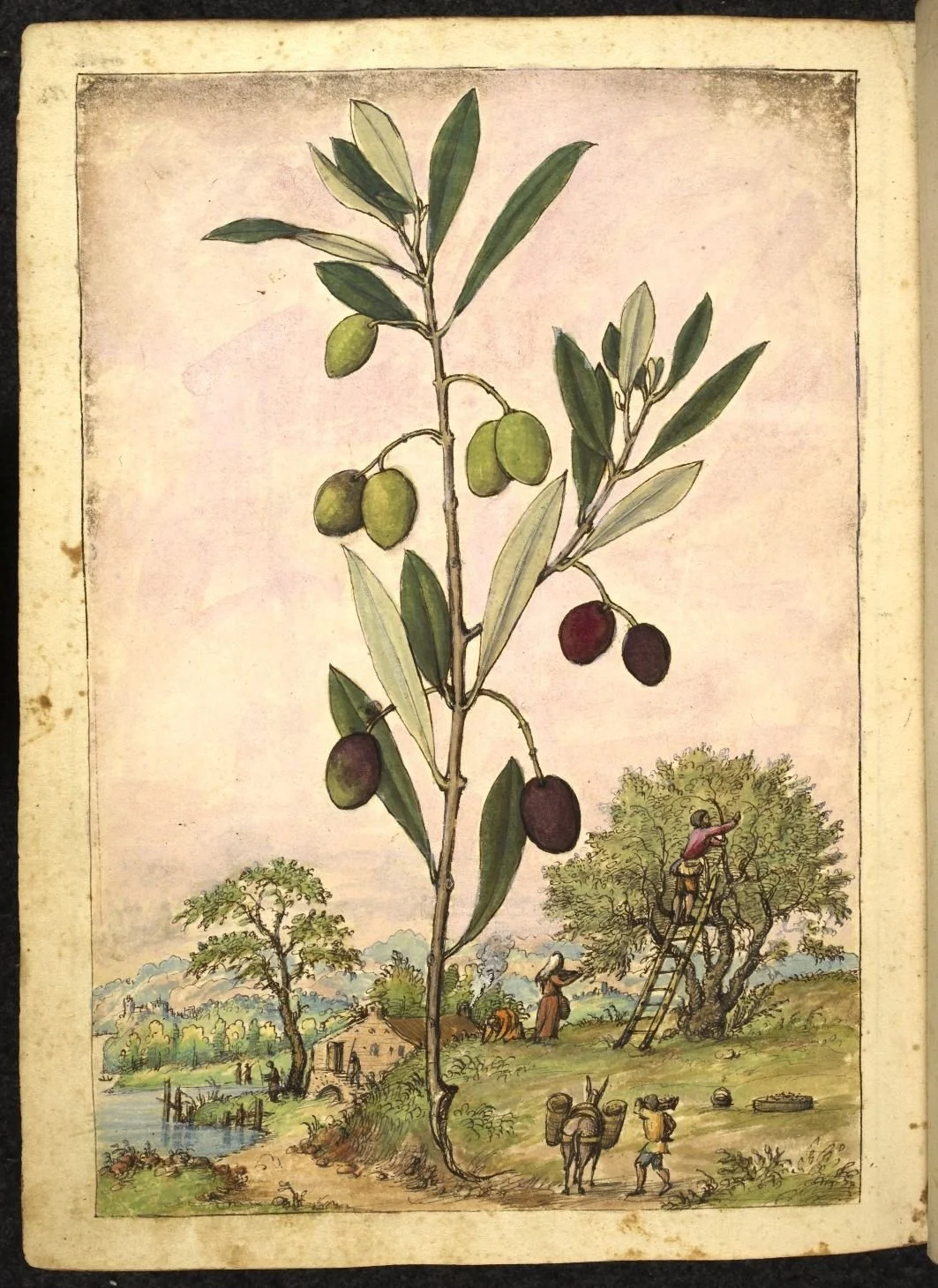
The olive is presented as the hero in the painting with a background depicts the practices related to it and the landscape it flourishes in. The illustration is from Pietro Andrea Mattioli, Discorsi, a herbal assembled and illustrated by Gherardo Cibo. MS 22332 -f.181v ( courtesy to the British Library)
What Is the Dominant Perception of Plants in Contemporary Culture?
In contemporary culture, plants are rarely perceived as living beings with histories, relationships, and a role in the making of a place. Instead, they are primarily defined by the functions they perform for humans. A plant is seen as an agricultural crop, a raw material, an ornamental feature, a commercial product, or a means of improving the urban environment.
Even when plants are celebrated, that celebration is often tied to what they provide for us rather than to what they are in themselves.
This leads us to a deeper question: How did this dominant perception come to be?
How Did This Perception Take Shape in the Modern Era?
To approach this question, we might imagine early human beings living within a natural world governed by complex and shifting relationships—deeply dependent on its elements and far more exposed to its fluctuations. Nature was not yet an external scene observed from a distance, but the very medium within which the conditions of survival, movement, and knowledge were formed.
With the Agricultural Revolution, humans began reorganizing parts of this world to suit their needs. They selected particular species, cultivated and bred them, and determined the seasons and places in which they would grow. This transformation was not simply a rupture with nature. It also produced highly detailed knowledge of plants and sustained traditions of care. At the same time, however, it initiated a new phase of human intervention and control.
This trajectory expanded with the rise of modern science, industrialization, and economic systems built upon the extraction, classification, and valuation of resources. Over time, a worldview took hold in which human beings came to see themselves as separate from living systems and capable of managing them from the outside.
The relationship was gradually reversed. Rather than human communities living within natural systems that sustained them and with which they continually interacted, humans increasingly began designing controlled environments and then reintroducing plants into them as added components. Gardens, tree-lined streets, green roofs, and houseplants may all provide genuine ecological value. Yet they also reveal a broader cultural perception in which nature has become something we arrange, consume, and assign a place to, rather than something within which we already live.
Many thinkers have described this transformation as the objectification of the natural world: the reduction of a living being to a function, a utility, or a value available for human use.
But what are the consequences if this perception continues to prevail? And is it a perception that must change?
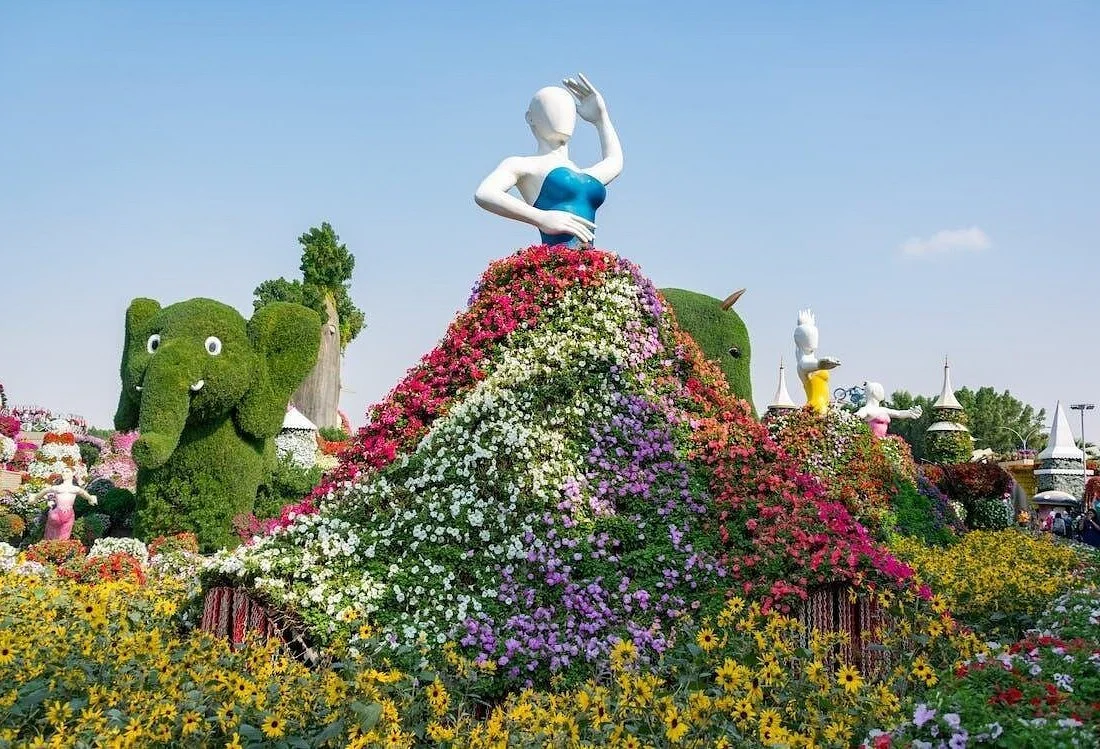
Miracle gardens are engineering marvels, but how much of a life are plants truly allowed to live within them as living beings?
What Is the Fate of the Planet in a World That Objectifies Plants and Neglects the Natural World? Must This Reality Change?
Comparing what remains of forests and natural ecosystems today with their extent only a few decades ago reveals the scale of the transformation humanity has brought about in the living world. Deforestation, habitat degradation, rising temperatures, and increasingly disrupted climate patterns coincide with a mode of thought that regards nature as a resource to be extracted and managed, and plants primarily in terms of the food, raw materials, or economic value they provide to humans.
This does not mean that the relationship between people and plants has disappeared. Rather, in many cases, it has persisted as a one-sided and deeply unbalanced relationship. The problem does not lie in our use of plants, which has accompanied humanity since its earliest beginnings, but in allowing human benefit to become the sole framework through which plants are perceived—reducing their existence to isolated functions, detached from their relationships with other living systems.
The consequences of this reduction are visible in forest fires, drought, biodiversity loss, declining soil fertility, and growing threats to food security. Nor do these transformations remain distant from everyday life: they extend into our food and water, our health and homes, patterns of migration, and the stability of communities.
What is needed, therefore, is not simply more information about plants, but a reshaping of our relationship with them: a movement away from control and extraction toward a more reciprocal relationship—one that recognizes that humanity does not manage the natural world from outside it, but lives within it and depends upon its continuity.
From this perspective, the recovery of botanical knowledge, direct experience, storytelling, and art becomes a means of learning to see plants once again as living beings and as partners in the making of place—not merely as resources awaiting our decisions about their fate.
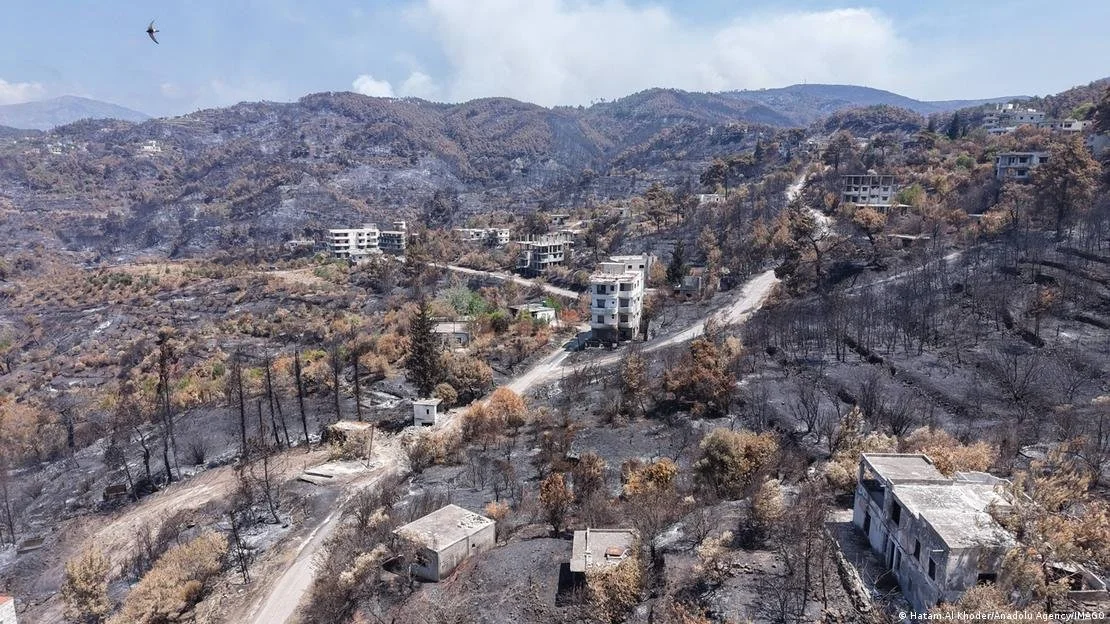
Fire forest in costal mountains of Syria 2025
How Can This Complex Relationship Between Plants and People is Reshaped in Light of the Long Historical Legacy That Has Brought It to Its Present Form?
Many people believe that placing a lone plant in a small pot on a kitchen shelf represents a meaningful contribution to confronting climate change. The point of this example is not to diminish the value of such an act, but to recognize that a crisis centuries in the making cannot be addressed through isolated or symbolic gestures alone. The problem is not that plants are absent from our lives, but rather the nature of the relationship that connects us to them.
Reshaping this relationship does not begin simply with planting more plants. It begins with understanding the places to which they belong, the geographies that have shaped their existence, the people who have lived alongside them, and the cultural language through which these relationships have been understood and practiced across history. Every society has developed its own ways of perceiving and engaging with plants, and every place carries stories, practices, and forms of knowledge that cannot be replaced by generalized environmental discourse or standardized solutions.
This is where the idea of Botanical Storytelling begins. It is not merely an invitation to write stories about plants, but a methodology that seeks to gather the stories people have woven with plants in the places they inhabit; to situate those stories within their historical, cultural, economic, and ecological contexts; and then to retell them in a contemporary language that restores the presence of plants as partners in the making of place, rather than reducing them to resources or silent backdrops.
In this way, storytelling becomes a means of rebuilding a more conscious and reciprocal relationship between people and plants—not by denying the cultural legacy that has shaped this relationship, but by understanding it and redirecting it toward the future
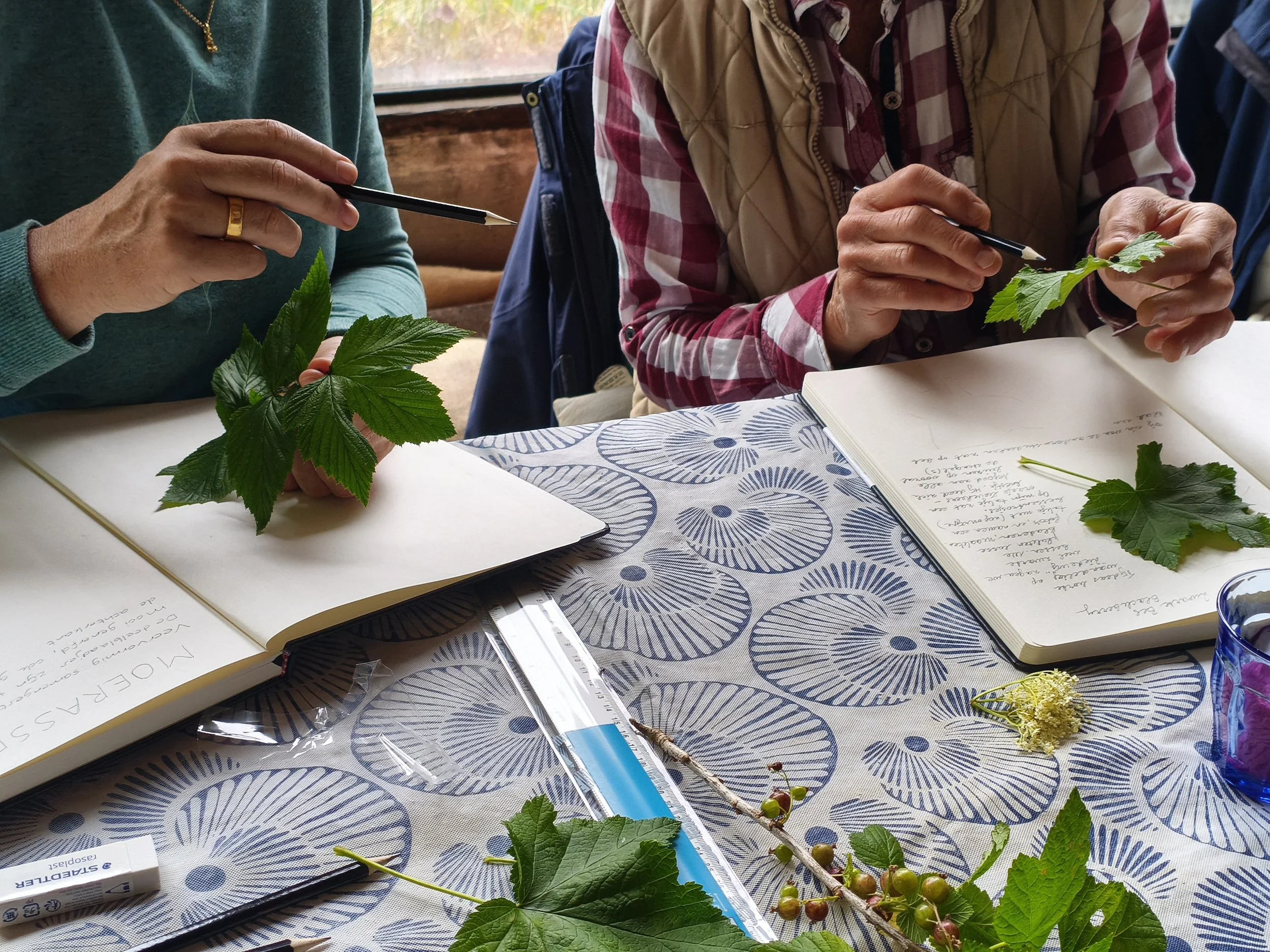
Observing the details of a Black Current leaf and other plants in the Botanical exploration workshop 2025
Why Should We Tell Plant Stories?
Storytelling is a universal language. It is not merely a way of describing what has happened, but a force that has always participated in the making of human history. Whenever the stories people believe in begin to change, so too do the ways in which they perceive the world and act within it—and, consequently, the history they go on to create.
Even scientific knowledge, however abstract it may appear, does not emerge without a story. Behind every piece of knowledge lies a history of questions, observations, experiments, errors, and discoveries, as well as relationships between people, living beings, and places that ultimately gave rise to that knowledge. The story of a plant cannot therefore be separated from what we know about it, just as the way we tell its story cannot be separated from the way we perceive and relate to it.
Plant stories are as old as humanity itself. The Botanical Storytelling project believes that recovering and sharing them can touch the deepest layers of memory, identity, and belonging, while reshaping our understanding of humanity’s place within the living world.
A simple question like: What plant did you eat today? How many trees did you see along the the street? Did you wear a fragrance derived from a flower, a leaf, or a piece of wood? Did the colour green leave an impression on your memory today?. This drives us to the conclusion:
Plants are present in almost every detail of our existence—in our bodies, our homes, our cities, and our memories—yet they so often remain outside the centre of the story. So,in your opinion now, how many stories can you tell about plants?
