
On the Trail of the Rare flower
Flora Mundi—In Search of Lost Voices is a focused exhibition at the National Library of the Netherlands, curated by Esther van Gelder. Bringing together historic manuscripts and botanical records from regions beyond the Netherlands, the exhibition explores how plants, landscapes, and local knowledge were documented within the context of Dutch colonial expansion. Yet its central concern lies not only in what these books preserved, but also in what they left out. Many forms of knowledge—especially those rooted in oral traditions, everyday practices, and the relationships between local communities and their natural environments—were rarely acknowledged in official botanical accounts. By drawing attention to these absences, the exhibition invites visitors to question whose voices entered the archive, whose knowledge was overlooked, and how botanical history might be retold from a broader and more inclusive perspective.
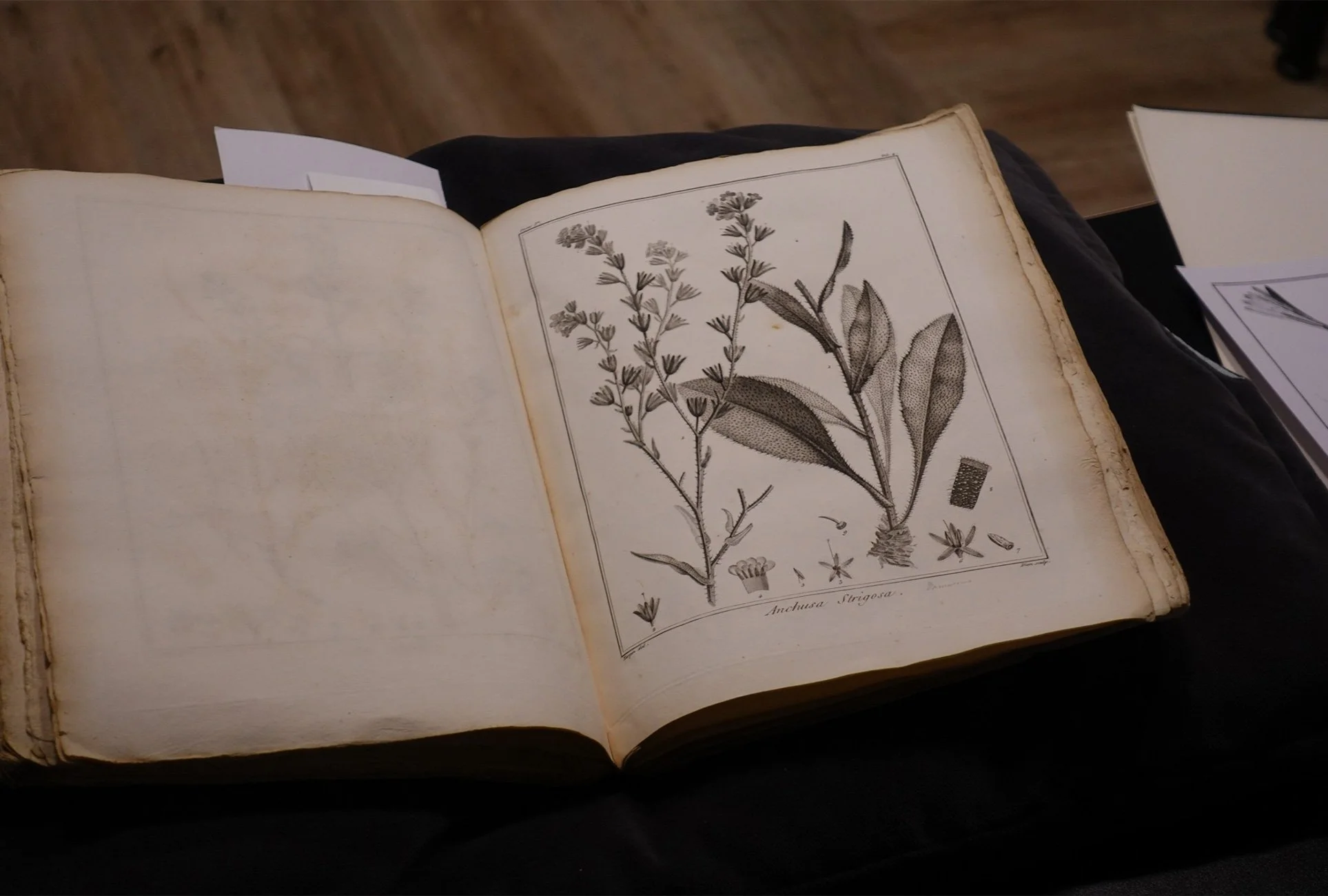
The book of Icones Plantarum Syriae Rariorum - KB Den Haag
The discovery of a copy of Icones Plantarum Syriae Rariorum in the National Library of the Netherlands inspired the idea of bringing the historic book back into view through a contemporary interpretation. The project sought not only to highlight its botanical content, but also to compare the plants documented more than two centuries ago with their presence in the region today. The species recorded in the book were first classified according to their places of collection. A selection was then compared with recent observations and documentation produced by local plant enthusiasts. Remarkably, several of the rare wild species described by La Billardière continue to grow in Syrian landscapes today. This continuity became the starting point for the artwork, which traces the visual history of two plants from La Billardière’s book across different periods, from the earliest known records to contemporary representations. Rather than relying primarily on written descriptions, the project focused on the changing visual forms through which these plants have been documented. Botanical drawings, herbarium specimens, photographs, and a newly created illustration by the designer were brought together to reveal how each species has been seen, preserved, and represented over time. The first selected plant was Ixiolirion tataricum, a wild, lily-like species that appears in open fields during early spring. The second was Anchusa strigosa, commonly known as ox-tongue, a familiar plant whose young leaves are traditionally eaten in local food practices.
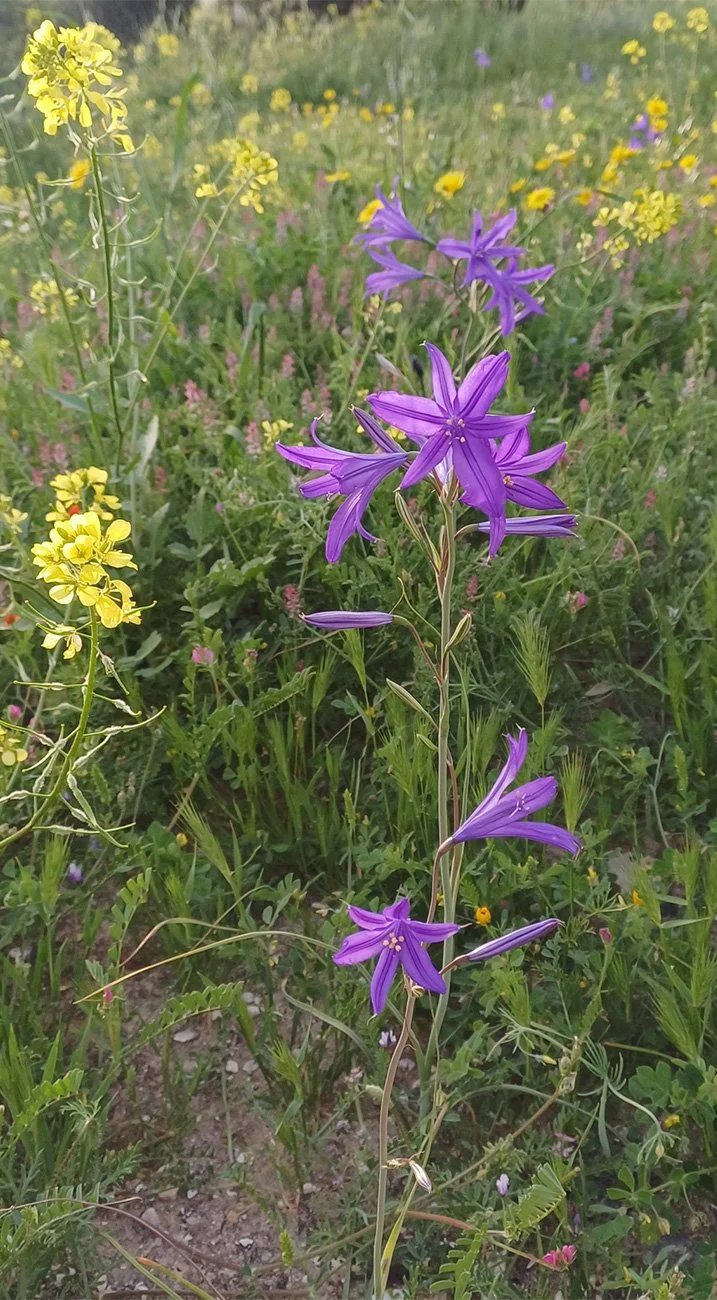
Ixiollirion tataricum - Spring of Salamyieh / Syria - photo by: Modar Wannous 2026
The project presents La Billardière’s book as one chapter in a much longer history of visually documenting the two selected plants, while keeping the plants themselves at the center of the story. Tracing this history became a journey through different ways of seeing: from early medicinal illustrations associated with Dioscorides, with their flat forms and emphasis on distinctive features, to herbarium specimens, European engravings, printed botanical plates, and later photography. The artwork brings these different forms of documentation together. It includes historical depictions of Anchusa strigosa from different periods, alongside preserved specimens, photographs, and contemporary interpretations created by the designer. These new contributions include an embroidered icon of the plant and a realistic drawing that attempts to place it back within its natural environment.The embroidery threads, worked in a traditional peasant stitch, connect the different fragments of the story. Their role is both visual and symbolic: just as this stitch once joined separate pieces of a garment, it now brings together different periods, sources, places, and perspectives. A particularly meaningful element is the preserved bee collected by Dutch biologist Klaas Brantjes in Palestine in 1981 from the very same plant explored in the work. Its presence creates an unexpected connection between plant, insect, researcher, and landscape—a quiet coincidence that expands the narrative beyond human observation alone. The aim of the project was not simply to retell the medicinal, biological, or scientific history of the plants. It sought instead to explore the evolving relationship between plants and people, and the ways this relationship has been shaped by changing forms of knowledge, representation, and human interaction with the natural world. At the heart of the work is a deliberate shift in perspective: first comes the plant itself, then the relationship between plant and human, and only after that the human observer. This reverses the familiar assumption that plants exist primarily to serve human needs. Instead, the project invites a deeper appreciation of biodiversity and of the remarkable ability of plants to endure, adapt, and flourish under changing and often difficult conditions—qualities from which humanity may still have much to learn.
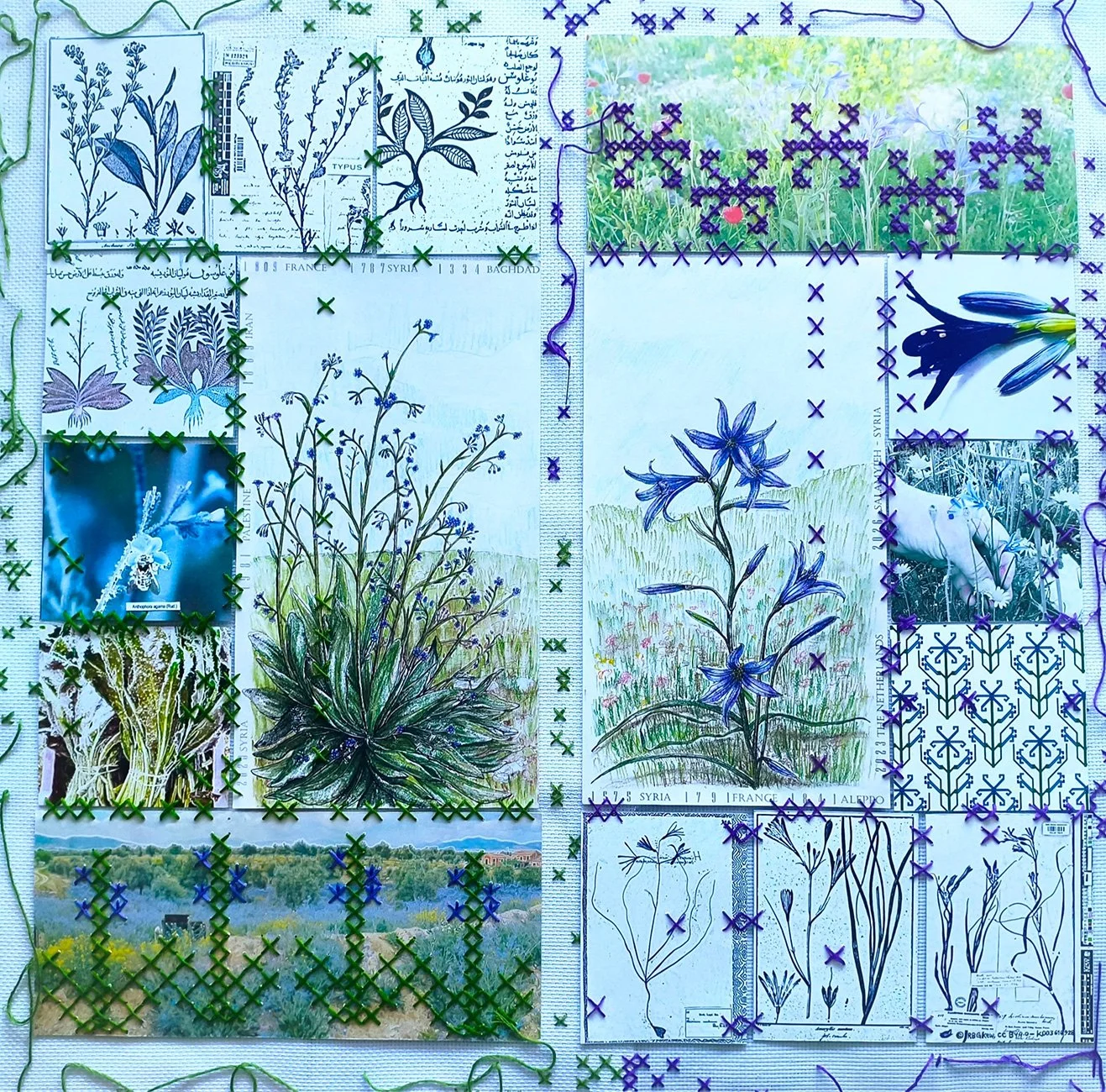
On the trail of the Rare Flower, artwork and map by Donea Almir - The Netherlands 2026
